Fatal Faith – Daniel 3

 “If this be so, our God whom we serve is able to deliver us from the burning fiery furnace, and he will deliver us out of your hand, O king. But if not, be it known to you, O king, that we will not serve your gods or worship the golden image that you have set up” (Daniel 3:17-18, ESV).

Daniel 2 tells the story of King Nebuchadnezzar of Babylon having a troubling dream that none of his wise men could explain. He demanded they not only interpret his dream but also describe the dream itself–otherwise they would be executed! Daniel, a Hebrew exile to Babylon, prayed to God who revealed to Daniel both the dream and its meaning. Daniel then explained the dream and its interpretation to King Nebuchadnezzar and prevented the execution of the Babylonian wise men including himself and his three fellow exiles.

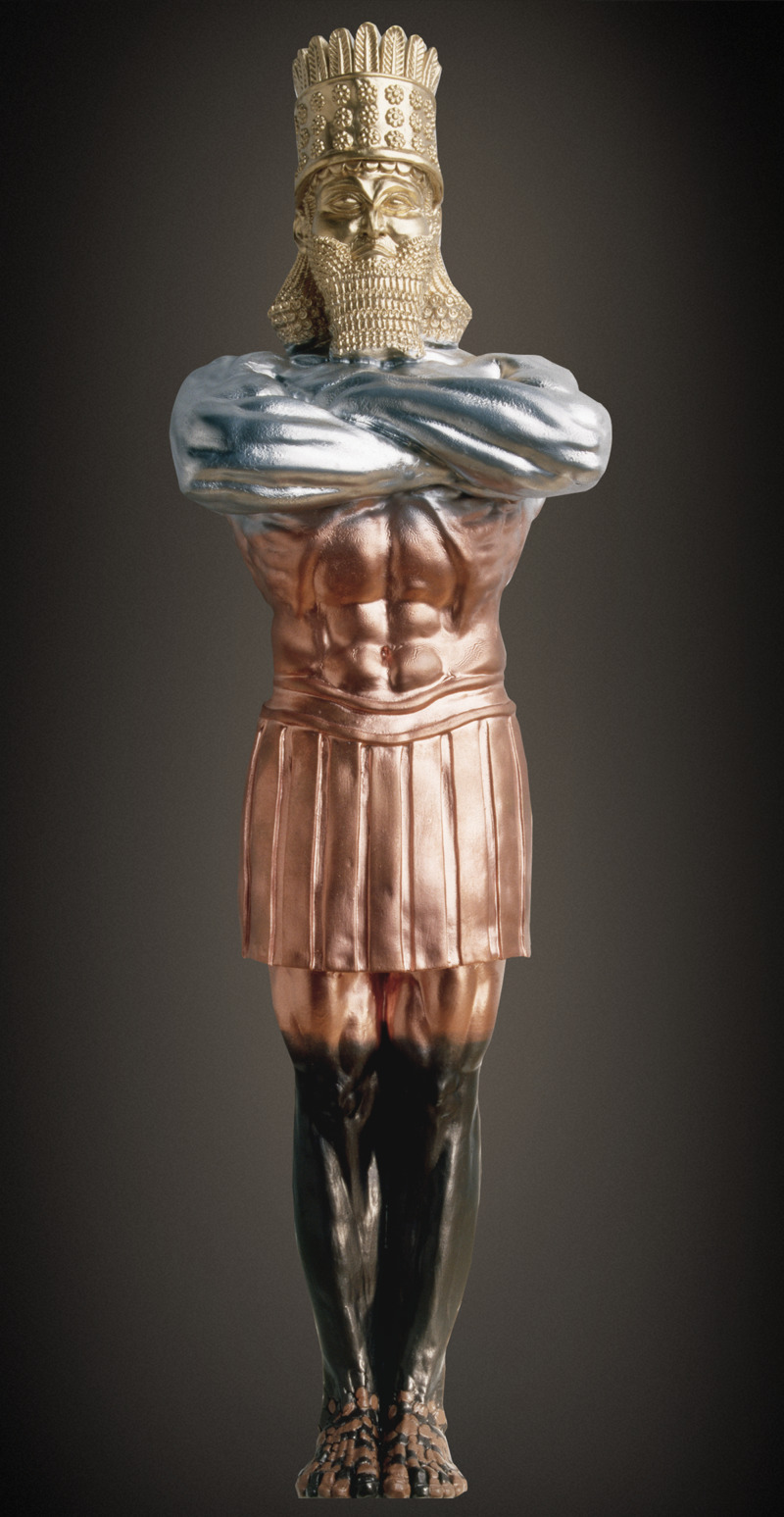
At the end of Chapter 2 King Nebuchadnezzar proclaimed: “Truly, your God is God of gods and Lord of kings, and a revealer of mysteries, for you have been able to reveal this mystery” (vs. 47). Nevertheless, by the beginning of Daniel 3, some eight years later, Nebuchadnezzar’s acclaim for the sovereignty of Israel’s God seemed to have dissipated. In Daniel 3 Nebuchadnezzar made a 90-foot high golden image, presumably of himself, for all the Babylonians to worship!

Though not explicitly stated, there seems to be a literary connection between the stories in Daniel 2 and 3. In Daniel 2 Nebuchadnezzar dreams of a statue with a head of gold, which represented Nebuchadnezzar’s empire: “You are the head of gold” (Daniel 2:38, ESV). The body of the statue was made of several substances representing the rise and fall of multiple historical empires after the Babylonian empire. But, in Daniel 3 Nebuchadnezzar made an entire image of gold.

Although Daniel told Nebuchadnezzar that only God’s kingdom will stand forever (Daniel 2:44), the symbolism of an image constructed completely of gold presumed the permanence and supremacy of Nebuchadnezzar’s rule. The creation of the image was an act of religious defiance and self-exaltation. The story’s symbolism also recalls the events of Exodus 32 when the Israelites fashioned a golden calf at the foot of Mt. Sinai while Moses was on the mountain receiving the Law from God. Like Nebuchadnezzar, the Israelites were substituting human invention (idolatry) for divine revelation (God’s covenant) when God had miraculously demonstrated otherwise to both.

While the statue may not have been a straightforward image of Nebuchadnezzar, it likely represented his authority, his kingdom, and the allegiance he demanded. What it almost certainly was not, was Nebuchadnezzar’s attempt to honor or depict the God of Israel as he understood Him. So, the ulterior motives of Nebuchadnezzar became the context for the well-known account of the fatal faith demonstrated by Daniel’s three friends: Shadrach, Meshach, and Abednego.

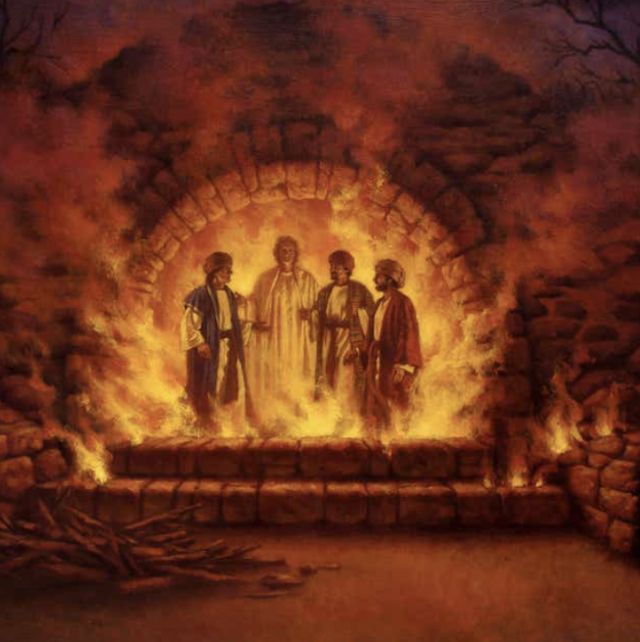
King Nebuchadnezzar decreed that all people (of the Babylonian empire) should fall down and worship the giant golden statue he had constructed with the penalty of execution by being burned alive for those who didn’t comply. Nebuchadnezzar’s advisors informed him that Shadrach, Meshach, and Abednego, who were promoted to official positions in the province of Babylon after the dream interpretation episode (see Daniel 2:49), refused to bow down to the statue. Their faith in God prevented them from worshiping an idol and it was a fatal faith because it could result in their deaths. Their refusal to worship Nebuchadnezzar’s idol could cause them to suffer a violent and excruciating death by being burned alive (makes you wonder why this story is so popular in children’s Sunday School lessons).

Nebuchadnezzar was furious and had Shadrach, Meshach, and Abednego brought in for questioning. When asked directly by King Nebuchadnezzar if they were going to worship the golden image with the threat of being thrown into a fiery furnace and burned alive if they did not, they responded with a definitive no-way! They declared that God could deliver them from being incinerated in the fiery furnace, but if He didn’t they still would never worship the golden idol!

Ancient Babylon was famous for massive brick construction and large furnaces were not uncommon. The furnace was likely a large industrial kiln used for smelting metals, firing bricks, and/or producing ceramics with an opening on the top or side large enough to cast people in and an opening to see inside. Furious at their resistance Nebuchadnezzar ordered the furnace heated much hotter than usual and had Shadrach, Meshach, and Abednego, bound and thrown into the burning furnace. The furnace was so hot that its temperature was lethal at close range and the soldiers who threw them into the fire were killed by the heat.

After the men were thrown into the furnace Nebuchadnezzar looked in and was astonished because their bonds were burned off and they walked around freely accompanied by a mysterious fourth figure. Nebuchadnezzar identified the fourth figure as a son of God (or “the gods” – Daniel 3:25, ESV) and it is presumed to be either an angel or a Christophany, a pre-incarnate appearance of Christ. While the figure’s exact identity is open to interpretation, what’s we do know is that to Nebuchadnezzar it revealed the powerful presence of God Himself as His divine protection and deliverance of His people in the midst of impossible circumstances (again, recalling the Exodus story).

Shadrach, Meshach, and Abednego were willing to die for their faith in God because they knew something else. They knew the end from the beginning! They knew that fatal faith is faith that you can die for because it is also faith that you can live (forever) for.

The writer of the book of Hebrews in the New Testament refers to the fatal faith of these Hebrew exiles and others with faith like them in ancient times: “For time would fail me to tell of Gideon, Barak, Samson, Jephthah, of David and Samuel and the prophets—who through faith conquered kingdoms, enforced justice, obtained promises, stopped the mouths of lions, quenched the power of fire, escaped the edge of the sword, were made strong out of weakness, became mighty in war, put foreign armies to flight (Hebrews 11:32-34, ESV).

And, the reason for their faith, the Hebrews writer explained, was that fatal faith was forward-looking faith, future-oriented faith. It was faith expressed as living in this world in expectation of living eternally in a heavenly home: “For people who speak thus make it clear that they are seeking a homeland… they desire a better country, that is, a heavenly one. Therefore God is not ashamed to be called their God, for he has prepared for them a city” (Hebrews 11:14-16, ESV).

So, how much heat can your faith in God take?

Absolute Power – Daniel 2

“Blessed be the name of God forever and ever,
    to whom belong wisdom and might.
He changes times and seasons;
    he removes kings and sets up kings;
he gives wisdom to the wise
    and knowledge to those who have
    understanding;
he reveals deep and hidden things;
    he knows what is in the darkness,
    and the light dwells with him

(Daniel 2:20-22, ESV).

In Daniel 1 the king of Babylon invaded Judah and besieged Jerusalem. Many people from the nobility and royal family of Judah were exiled to Babylon. Daniel and three of his friends were among the exiles. As youths they were to be educated in the Chaldean language and culture. The faithfulness of Daniel and his friends is tested and with God’s favor upon them they are proven to have greater understanding and knowledge than all the Chaldean wise men in Nebuchadnezzar’s court.

In Daniel 2 King Nebuchadnezzar had a dream and wanted the wise men of his court to interpret it. The thing is, he didn’t want them just to interpret the dream; he wanted them to reveal what the dream was and then interpret it.

King Nebuchadnezzar wasn’t exactly an enlightened ruler and when his wise men couldn’t tell him the dream, he was furious and decreed for them all to be executed. Apparently, Daniel and his friends were at the top of the kill list. When the captain of the king’s guard came to take them to be executed, Daniel requested a meeting with the king to tell him he could interpret the dream.

Daniel told his friends about King Nebuchadnezzar’s decree and they all prayed and asked for God’s help in knowing and interpreting the dream to Nebuchadnezzar. And, God revealed the dream and its interpretation in a night vision to Daniel! In response to revealing Nebuchadnezzar’s dream to him, Daniel proclaimed the song of praise celebrating God’s power, wisdom, and control over history in vs. 20-22.

Continue reading

For the Sake of Others – Daniel 1

But Daniel resolved that he would not defile himself with the king’s food, or with the wine that he drank. Therefore he asked the chief of the eunuchs to allow him not to defile himself. And God gave Daniel favor and compassion in the sight of the chief of the eunuchs and the chief of the eunuchs said to Daniel, ‘I fear my lord the king, who assigned your food and drink; for why should he see that you were in worse condition than the youths who are of your own age. So you would endanger my head with the king.’ Then Daniel said to the steward whom the chief of the eunuchs had assigned over Daniel, Hananiah, Mishael, and Azariah, ‘Test your servants for ten days; let us be given vegetables to eat and water to drink……’ At the end of ten days it was seen that they were better in appearance and fatter in flesh than all the youths who ate the kings food” (Daniel 1:8-15, ESV).

Nebuchadnezzar, the king of Babylon, besieged Jerusalem in 605 BC and among the Jewish nobility and royal family deported to Babylon were Daniel and his three friends. They were to be trained in the Babylonian language and literature and assimilated into Babylonian culture. (vs. 1-4).

To protect themselves from being entangled in the temptations of the idolatrous Babylonian culture, Daniel and his friends used their distinctive kosher diet as a way of avoiding complete assimilation and retaining their distinctive identity as Jewish exiles in Babylon. This restrictive diet continually reminded them that they were the chosen people of God in a foreign land.

So, Daniel asked the chief of the eunuchs, who was in charge of training the youths, if they could only eat vegetables and drink water. The chief of the eunuchs was hesitant at first, believing that such a diet would diminish their health, but agreed to try it for ten days.

At the end of the ten days they were noticeably in better health than all the other youths who ate the king’s food!

Not only were they healthier, but God blessed them with learning and skill in all literature and wisdom and Daniel had understanding of dreams and visions (vs. 17).

Continue reading

Surviving the Zombie Apocalypse – Ephesians 2:1-8

“And you were dead in the trespasses and sins in which you once walked, following the course of this world, following the prince of the power of the air, the spirit that is now at work in the sons of disobedience—among whom we all once lived in the passions of our flesh, carrying out the desires of the flesh and the mind, and were by nature children of wrath, like the rest of mankind. But God, being rich in mercy, because of the great love with which he loved us, even when we were dead in our trespasses, made us alive together with Christ—by grace you have been saved—and raised us up with him and seated us with him in the heavenly places in Christ Jesus, so that in the coming ages he might show the immeasurable riches of his grace in kindness toward us in Christ Jesus. For by grace you have been saved through faith. And this is not your own doing; it is the gift of God” (Ephesians 2:1-8, ESV).

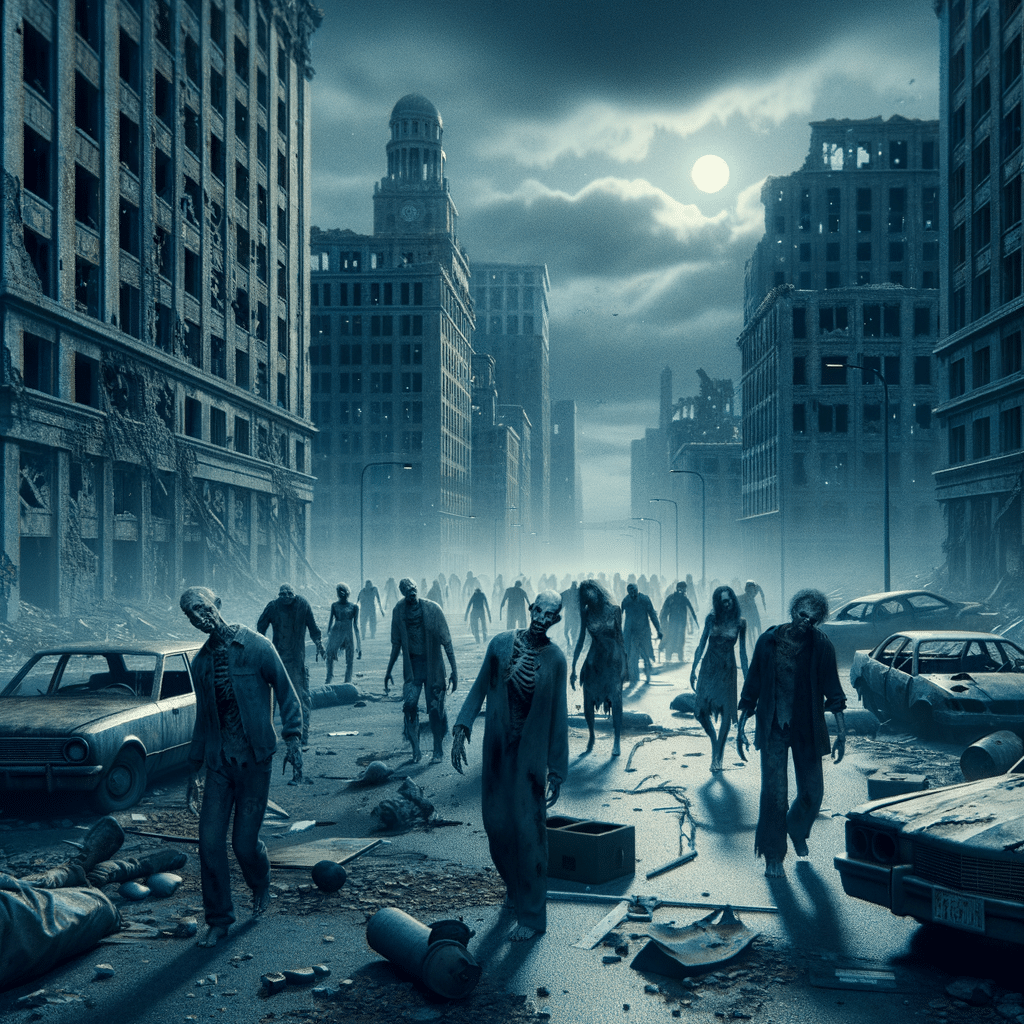
A zombie apocalypse is coming according to many current movies and televisions shows fixated on zombies. In the movies the zombie apocalypse is a fictional world where societal collapse occurs due to an overwhelming outbreak of undead, infectious human beings.

But maybe the zombie apocalypse is already here!

In these verses from the Apostle Paul’s letter to the Ephesians the zombie apocalypse may not be so fictional and it may have already arrived! Ephesians 2:1-2 indicate there is already an overwhelming outbreak of the walking dead causing societal collapse: “And you were dead in the trespasses and sins in which you once walked, following the course of this world, following the prince of the power of the air, the spirit that is now at work in the sons of disobedience” (vs. 1-2).

According to Paul, there is walking dead everywhere. He says it is the way of this world. So, we live in a fallen world that is overwhelmingly inhabited by people who are spiritually dead!

Because the zombie apocalypse seems to have started with Adam and Eve in the Garden of Eden!

Continue reading

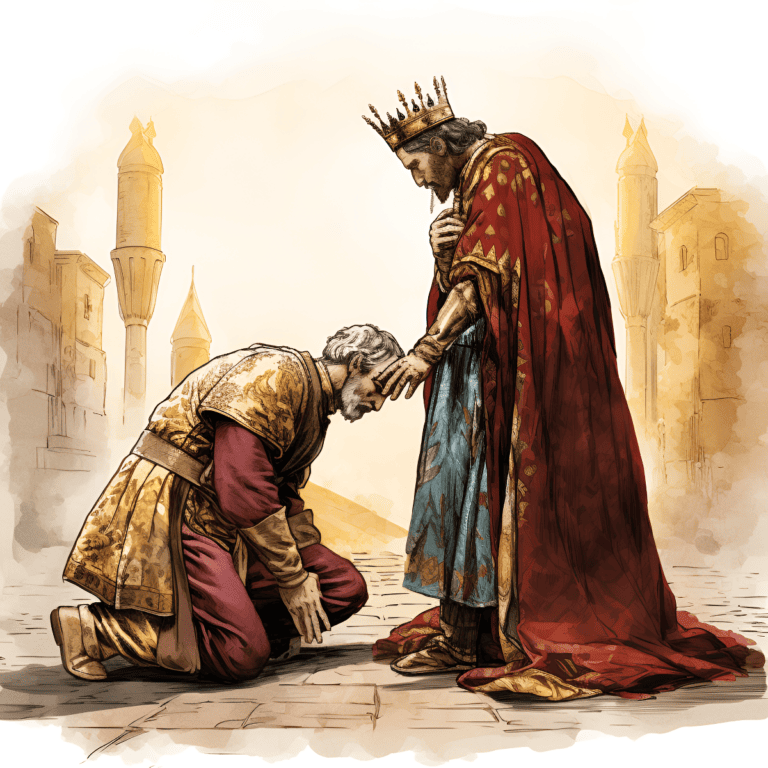
Kiss the Son – Psalm 2

Now therefore, O kings, be wise;
    be warned, O rulers of the earth.
Serve the Lord with fear,
    and rejoice with trembling.
Kiss the Son, lest he be angry,
    and you perish in the way,
    for his wrath is quickly kindled.
Blessed are all who take refuge in him.
(Psalm 2:10-12, ESV)

In the Second Temple period (about 516 BC–70 AD) and early Jewish literature, this Psalm was usually read about Israel’s king (a historical Davidic ruler) or about a future Messiah from David’s line. It was possibly a royal Psalm used at the coronation of a king of Judah.

There’s no doubt that it had a messianic message: “The Lord said to me, “You are my Son; today I have begotten you. Ask of me, and I will make the nations your heritage, and the ends of the earth your possession. You shall break them with a rod of iron and dash them in pieces like a potter’s vessel” (vs. 7-9).

Luke in Acts 13:33 and the Hebrew writer in Hebrews 1:5 and 5:5 quoted from vs. 7 about the Divine Sonship of Jesus. John in his Revelation refers to the messianic conquering king in Revelation 2:27, 12:5 and 19:15 using the imagery of vs. 8-9.

While Psalm 2 presents a warning or notification to the kings and rulers of the ancient world, let’s look at it from another point of view. There is a sense in which this Psalm applies to all people–to you and me.

Continue reading

How To Be a Christian Without Being Religious – Matthew 12:1-14

At that time Jesus passed through the grainfields on the Sabbath. His disciples were hungry and began to pick and eat some heads of grain. When the Pharisees saw this, they said to him, “See, your disciples are doing what is not lawful to do on the Sabbath.” He said to them, “…. If you had known what this means, I desire mercy and not sacrifice,you would not have condemned the innocent. For the Son of Man is Lord of the Sabbath” (Matthew 12:1-8, CSB).

In the early 1970’s Fritz Ridenour published a book, How To Be a Christian Without Being Religious. Presenting a practical commentary on the New Testament book of Romans, the book distinguishes between genuine faith and religious hypocrisy as it explores how “religion” as a practice can become empty when it is severed from authentic faith based on a personal relationship with Christ.

In Matthew 12 Jesus gives us a workshop on religion vs. relationship.

At the beginning of Matthew 12 Jesus and His disciples are walking through a grain field on the Sabbath. As they passed through the field they picked and ate some of the heads of grain. Some Pharisees saw the disciples picking grain on the Sabbath and complained to Jesus that it was unlawful. For modern disciples, the greater offense appears to be stealing another man’s grain. But, under the Mosaic law handpicking grain from a neighbor’s field was not considered stealing (see Deuteronomy 23:25).

First century rabbis divided work prohibitions into dozens of categories with each having many subcategories. Three prohibited categories were picking, threshing and winnowing; thus, by picking the grain and rubbing it between their hands to remove the husks the disciples were guilty on all three counts!

Continue reading

Chosen – Matthew 11:25-30

“All things have been entrusted to me by my Father. No one knows the Son except the Father, and no one knows the Father except the Son and anyone to whom the Son desires to reveal him. Come to me, all of you who are weary and burdened, and I will give you rest. Take my yoke upon you and learn from me, because I am lowly and humble in heart, and you will find rest for your souls. For my yoke is easy and my burden is light.” (Matthew 11:27-30, CSB).

Do you remember when you were in school and you divided into two teams to play a game at recess or P.E.? Probably the most popular or most athletic kids were selected to be the team captains and pick the players for their respective teams. I never was the most athletic or most popular kid in school, so I never got picked first and always worried that I would be picked last!

In Matthew 11 John the Baptist had been arrested and incarcerated by Herod Antipas, Tetrarch of Galilee. John sent some of his disciples to ask Jesus if he was the coming Messiah. Jesus sent John’s disciples back to report what they heard and saw of Jesus’ ministry: “The blind receive their sight, the lame walk, those with leprosy are cleansed, the deaf hear, the dead are raised, and the poor are told the good news, and blessed is the one who isn’t offended by me” (vs. 5-6).

Jesus proceeded to extol the ministry of John the Baptist to His disciples and the townspeople that were listening to him and then denounced their unbelief: “For John came neither eating nor drinking, and they say, ‘He has a demon!’ The Son of Man came eating and drinking, and they say, ‘Look, a glutton and a drunkard, a friend of tax collectors and sinners” (vs. 18-19).

Continue reading

The Nicodemus Dilemma – John 3:1-21

“How can these things be?” asked Nicodemus (John 3:9, CSB).

During the twilight discussion between Jesus and Nicodemus, an iconic declaration is spoken by Jesus that is often included in tracts, sermons and Sunday School lessons: John 3:3: “Unless someone is born again he cannot see the kingdom of God.”

But little is discussed of Nicodemus’ side of the conversation and what he said to prompt Jesus to make this momentous pronouncement.

John indicates that Jesus went to Jerusalem for the Passover Festival at the beginning of his ministry. During the Passover Festival Jesus drove the money changers from the Temple and performed many miracles. As a result of the miracles many people in Jerusalem believed that Jesus was the Messiah (see John 2:13-25).

Probably during this Passover Festival in Jerusalem Nicodemus held his meeting with Jesus. Nicodemus was a Pharisee and ruler of the Jews and came to Jesus at night. Maybe Nicodemus was trying to avoid public scrutiny because of his religious and political position or he wanted to have a one-on-one conversation with Jesus when there weren’t crowds surrounding Jesus.

Having witnessed Jesus’ ministry in Jerusalem, Nicodemus apparently felt a disconnect between his religious understanding and what he observed in the ministry of Jesus at Jerusalem. Nicodemus’ dilemma is apparent in the questions he asked Jesus during their discussion.

Continue reading

Modern Idols – Deuteronomy 5

Do not have other gods besides me. Do not make an idol for yourself in the shape of anything in the heavens above or on the earth below or in the waters under the earth. Do not bow in worship to them, and do not serve them, because I, the Lord your God, am a jealous God, bringing the consequences of the fathers’ iniquity on the children to the third and fourth generations of those who hate me, but showing faithful love to a thousand generations of those who love me and keep my commands (Deuteronomy 5:7-10, CSB; the first and second commandments of the Ten Commandments).

The first two commandments of the Ten Commandments address the worship of God. The first commands us to worship only the one true God and the second commands us to worship God in the correct way (or avoid idolatry).

The word “worship” is related to the idea of ascribing worth to something. We worship what we think is worthy or important.

What you think is important is a priority in your life. It’s what you idolize. And, it’s what you worship.

The litmus test of a priority is what you spend your time and money on. And, what you spend your time and money on is likely what you talk and think about. So, the things that are really important to you are those things you spend your time and money doing and talking and thinking about.

Continue reading

A Little Jesus – Matthew 16:24-28

Then Jesus said to his disciples, “If anyone wants to follow after me, let him deny himself, take up his cross, and follow me. For whoever wants to save his life will lose it, but whoever loses his life because of me will find it. For what will it benefit someone if he gains the whole world yet loses his life? Or what will anyone give in exchange for his life? (Matthew 16:24-26, CSB).

A friend gave my wife a little figurine of Jesus and told her that “everyone needs a little Jesus.” I have started to notice these little Jesus figurines in lots of places. Recently, I pulled into the gas station to fill up the car with gas and there were little Jesus figurines holding “God Bless You” banners on all the gas pumps!

Although I am not keen on images or pictures of Jesus, I can certainly appreciate the play on words and the sentiment, “Everybody needs a little Jesus!”

But, the Bible and Jesus Himself explained that the amount of Jesus everybody needs is a whole lot more than just a little! In these verses from Matthew 16, the scenario Jesus described to His disciples was one of a condemned person carrying a cross on the way to execution. This imagery was certainly recognizable to His disciples as a form of capital punishment in the Roman Empire.

Continue reading